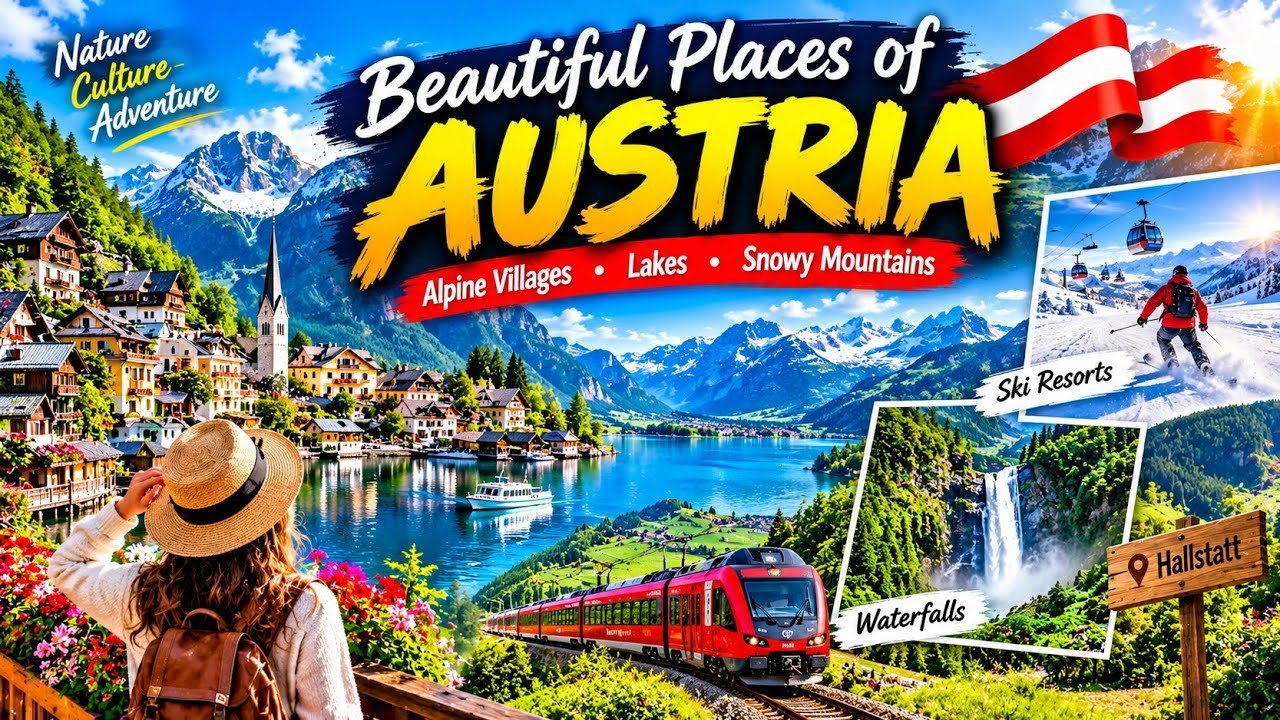
While postcard-famous spots like Hallstatt draw busloads of day-trippers every single morning, the vast mountain ranges of Austria hide a quieter, far more romantic world. Tucked away in deep alpine valleys and perched high on emerald plateaus lie timeless settlements where fresh crisp air meets unhurried mountain life.
If your ideal vacation involves waking up to the gentle clang of cowbells, hiking through untamed wildflower meadows, and breathing in pure alpine stillness without navigating souvenir shop crowds, this guide is your key. Welcome to the ultimate journey through Austria’s best-kept secrets.
1. Alpbach: Austria’s Official Flower-Filled Wonderland
Nestled in the heart of Tyrol, Alpbach has earned national titles as both the prettiest village in Austria and the most beautiful floral village in Europe. What makes this alpine enclave truly special is its strict local building code, which mandates that every home must be constructed out of traditional dark wood and adorned with overflowing red geraniums.
Stepping into Alpbach feels like walking directly into a pristine fairy tale setting that has remained unchanged for decades. Beyond its picturesque timber architecture, travelers can venture onto hundreds of kilometers of tranquil hiking trails that wind through lush alpine pastures and serene mountain ridges.
2. Heiligenblut: The Gothic Sanctuary at the Foot of the High Alps
Framed dramatically by the snow-capped peak of the Grossglockner—Austria’s highest mountain—Heiligenblut is a postcard-worthy haven located in the southern state of Carinthia. Its famous 15th-century Gothic church spire points dramatically toward the sky, creating one of the most iconic landscapes in the entire country.
Despite its majestic setting along the scenic Grossglockner High Alpine Road, the village itself retains a quiet, peaceful atmosphere once evening falls and day-trippers move on. Visitors can explore deep alpine valleys, glimpse wild ibex roaming rocky cliffs, or simply savor a hot bowl of traditional Tyrolean dumplings while taking in the views.
3. Damüls: The World’s Snowiest Village Turned Summer Paradise
Hidden away in the Vorarlberg region, Damüls holds a fascinating geographic honor as the snowiest village in the world, receiving meters of powder every single winter. However, when the snow melts away, it transforms into a dazzling green oasis framed by dramatic limestone crags and quiet mountain tarns.
Because the village sits far off the mainstream international tourist radar, visitors can enjoy pristine mountain hikes without encountering noisy crowds. The region is especially renowned for its warm local hospitality, family-run guesthouses, and farm-fresh artisanal cheeses crafted right in high-altitude dairies.
4. Gmünd in Kärnten: An Alpine Artists’ Hideaway
Located near the edge of Hohe Tauern National Park, Gmünd in Kärnten combines alpine wilderness with a surprisingly vibrant artistic soul. Surrounded by rushing mountain rivers and steep forest slopes, this medieval mountain town is famous for its cobblestone alleys lined with open art studios, galleries, and historic stone gateways.
Nature lovers can use Gmünd as a tranquil springboard to explore nearby glacier valleys and pristine mountain waterfalls before returning to town for an evening of quiet culture. It stands out as an inspiring sanctuary for travelers who love combining outdoor adventure with local creative arts.
5. Vent: The Untouched Refuge of the Ötztal Alps
While nearby mountain hubs like Sölden thrive on high-energy ski resorts and bustling nightlife, the small village of Vent located at the end of the Ötztal valley has consciously chosen a totally different path. It remains a tranquil refuge dedicated purely to nature, mountaineering, and sustainable alpine tourism.
Surrounded by glacier-capped peaks rising above 3,000 meters, Vent offers some of the most spectacular mountain trekking routes in the Eastern Alps. It is the ultimate escape for mountain purists seeking solace, clean air, and unmatched panoramic views far away from commercialized ski infrastructure.
6. Maria Alm: A Picturesque Haven Under the High King
Tucked beneath the shadow of the towering Hochkönig mountain range in Salzburg province, Maria Alm centers around a charming village square dominated by an extraordinarily tall church spire. The surrounding landscape offers a breathtaking contrast between soft rolling green pastures and jagged mountain walls.
Whether you visit in late spring to watch green valleys burst into bloom or in autumn when golden forests cover the hillsides, Maria Alm offers slow-travel bliss at its finest. It serves as a reminder of what mountain travel used to be before massive resort developments took over.
Why Seeking Out Remote Alpine Villages Matters
Choosing to visit remote villages in the Alps of Austria is more than just an escape from crowded tourist hubs; it is a conscious way to travel. It directly supports small rural economies, helps preserve centuries-old mountain traditions, and encourages eco-friendly sustainable tourism.
By taking the winding roads less traveled, you trade cookie-cutter experiences for authentic human connections, home-cooked regional meals, and peaceful natural settings. The quiet magic of the Austrian Alps is waiting—all you have to do is step off the main highway.
Frequently Asked Questions (FAQ)
What is the best time of year to visit remote villages in the Austrian Alps?
Summer (June to September) is ideal for hiking, clear mountain weather, and lush green scenery, while early autumn (September to October) offers pleasant temperatures and breathtaking fall foliage. For a magical winter getaway, December through March brings snow-covered chalets and quiet winter walking trails.
Is it necessary to rent a car to reach these hidden alpine destinations?
While Austria has an excellent national train network, renting a car gives you maximum flexibility to reach the most secluded valley villages. However, many remote villages are still connected by reliable local post-buses (Postbus) that run regularly from regional train stations.
Are remote Austrian villages suitable for budget-conscious travelers?
Yes, small remote villages often offer much better value for money compared to famous resort towns like St. Anton or Kitzbühel. Staying in family-run guesthouses (Gasthöfe) or farm stays (Urlaub am Bauernhof) includes generous regional breakfasts and authentic hospitality at affordable rates.
What should I pack for a trip to the Austrian mountain villages?
Weather in the mountains can change quickly, so layering is key. Pack sturdy waterproof hiking shoes, a windproof and rainproof jacket, a warm fleece, reusable water bottles, and comfortable casual wear for evenings spent enjoying hearty mountain meals in local inns.