
There was a time when thousands of eager travelers crowded these famous locations, cameras in hand and smiles on their faces. Today, the bustling crowds are long gone, replaced by haunting silence, crumbling walls, and nature quietly reclaiming her space.
Tourism boomtowns can seem immortal at their peak, yet history proves that popularity is often surprisingly fragile. Economic crashes, natural disasters, and shifting geopolitics can instantly turn a thriving paradise into a desolate ghost town.
Here are five legendary tourist spots around the globe that went from wildly famous to completely abandoned.
Varosha, Cyprus
During the early 1970s, Varosha was the ultimate luxury getaway for the world’s elite. Hollywood stars like Elizabeth Taylor and Brigitte Bardot lounged on its pristine golden beaches, while modern high-rise hotels framed the turquoise Mediterranean coastline.
Everything changed overnight in August 1974 during the Turkish invasion of Cyprus. Residents and tourists fled in total panic, leaving their belongings, cars, and meals behind, expecting to return once the conflict cooled down.
Instead, the district was fenced off, placed under military control, and strictly forbidden to the public for decades. The once-glamourous resort transformed into a frozen time capsule, where luxury hotels slowly collapsed behind rusted barbed wire.
Hashima Island, Japan
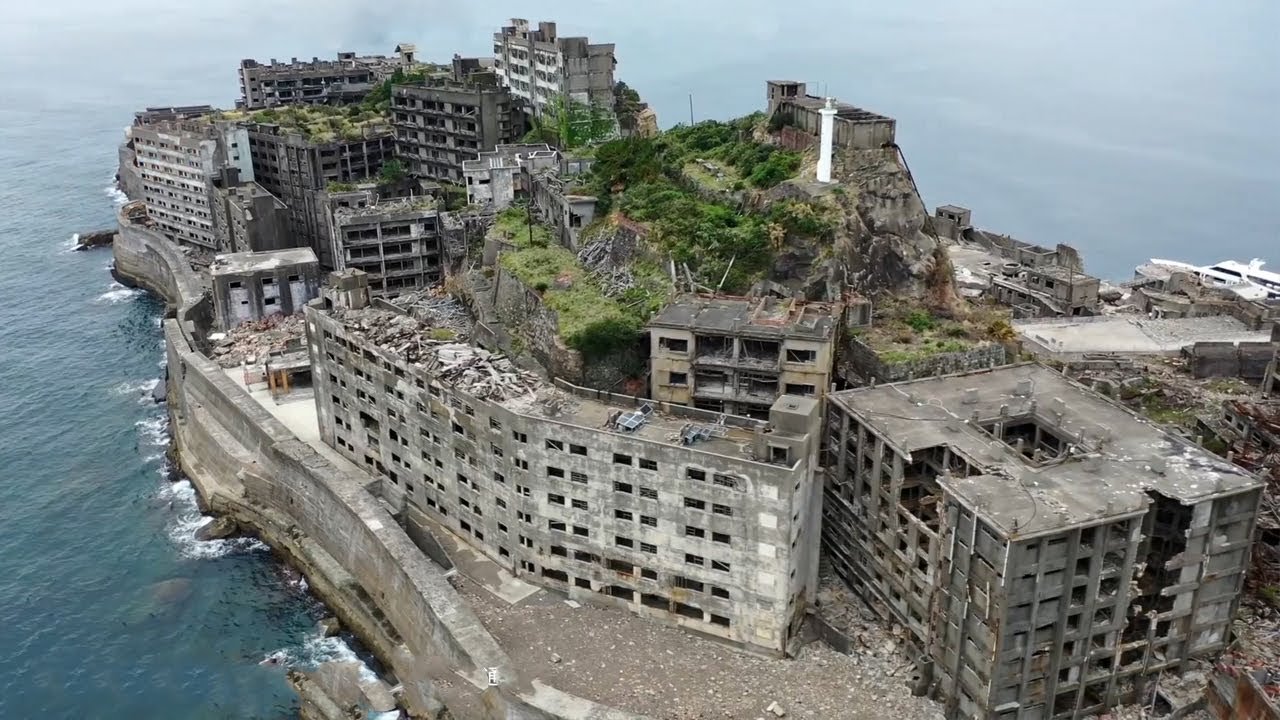
Rising out of the ocean off the coast of Nagasaki, Hashima Island looks like a massive concrete battleship. In the mid-20th century, this tiny island was one of the most densely populated places on the planet, housing thousands of undersea coal miners and their families.
As coal powered Japan’s rapid industrialization, Hashima transformed into a booming mini-metropolis complete with residential tower blocks, schools, movie theaters, and rooftop gardens. It attracted international attention as a miracle of modern engineering and community design.
When petroleum replaced coal as Japan’s main energy source in the 1970s, the mine closed down almost overnight. Residents packed what they could carry and abandoned the island, leaving an eerie jungle of decaying concrete structures rising from the sea.
Spreepark, Germany
Opened in 1969 in East Berlin, Spreepark was the primary amusement park for millions of citizens seeking thrill and entertainment. After the fall of the Berlin Wall, the park was modernized with grand rides, attracting up to 1.5 million visitors annually during its golden era.
However, escalating ticket prices, insufficient parking, and crippling debts soon pushed the park into severe financial trouble. By 2001, attendance plummeted, forcing the operators to quietly pack up several major rides and declare bankruptcy.
Nature swiftly took over the deserted fairground, wrapping vines around forgotten rollercoaster tracks and rusty booths. For years, the giant wooden Ferris wheel stood motionless in the mist, creaking ominously whenever the cold wind blew through the trees.
Villa Epecuén, Argentina
In the 1970s, Villa Epecuén was Argentina’s premier lakeside spa resort, famous for its therapeutic, hyper-salty thermal waters. Thousands of tourists from Buenos Aires flocked to the village every season to soak in the lake, which was said to cure ailments.
The paradise came to a catastrophic end in November 1985 when a rare weather event caused nearby dams to burst. A slow-moving wall of saltwater flooded the town, rising higher each day until the entire resort was submerged under ten meters of water.
Decades later, the water finally began to recede, exposing a surreal, snow-white landscape of dead trees and salt-encrusted ruins. Today, the bleached skeletal remains of hotels and swimming pools stand as a striking reminder of nature’s unpredictable power.
Bannerman Castle, USA
Perched on Pollepel Island along the Hudson River, Bannerman Castle was built by weapons merchant Francis Bannerman in the early 1900s. Designed to resemble a dramatic Scottish fortress, it served as a giant storage facility for military surplus while captivating pass-by riverboat tourists.
The island quickly became a local sensation, visible to millions of commuters traveling along the scenic Hudson Valley rail lines. It was a bizarre, romantic landmark that felt straight out of a European fairytale dropped into North America.
A series of devastating disasters, including a massive gunpowder explosion in 1920 and a fiery blaze in 1969, destroyed much of the estate. Today, the crumbling brick walls of the castle stand engulfed in thick ivy, accessible only by scheduled boat tours.