
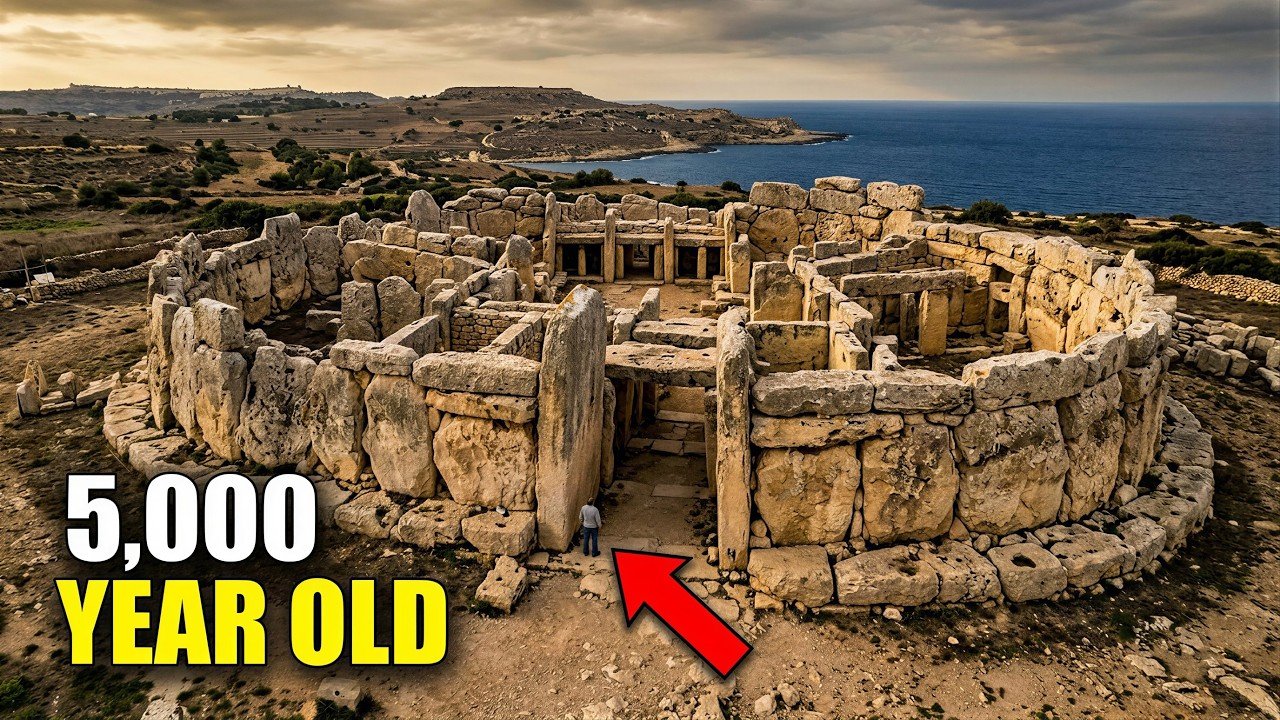
Long before the first stone of the Great Pyramid of Giza was hauled into place, and centuries before Stonehenge found its circle, an enigmatic ancient culture was hard at work on a sun-drenched archipelago in the heart of the Mediterranean. Today, those very structures still stand tall against the salty coastal winds.
Malta’s Megalithic Temples—a breathtaking collection of prehistoric monuments scattered across the islands of Malta and Gozo—are experiencing a steady surge of global travelers. More than five millennia after their construction, these architectural marvels continue to perplex archaeologists and entrance curious wanderers alike.
Walking up to complex sites like Ġgantija, Hagar Qim, or Mnajdra feels less like stepping back in time and more like crossing into an alternate dimension. Constructed between 3600 BC and 2500 BC, these UNESCO World Heritage sites represent some of the oldest free-standing stone structures on the entire planet.
What makes these temples so endlessly fascinating to modern visitors is the staggering degree of engineering sophistication display. Without the benefit of metal tools or the wheel, ancient Maltese builders maneuvered giant limestone blocks—some weighing over twenty tons—into elegant, clover-leafed temple layouts.
Local folklore once insisted that these colossal complexes were erected by a race of giant legendary beings. Indeed, the name Ġgantija literally translates to “Giant’s Tower” in the Maltese language, a testament to how awe-inspiring these megaliths appeared to later generations who simply couldn’t fathom human hands lifting such weight.
Beyond sheer scale, the temples demonstrate a sophisticated understanding of nature, astronomy, and spatial acoustics. At the Mnajdra temple complex, perched dramatically on a cliff edge overlooking the deep blue sea, the stone doorway aligns precisely with the rising sun during the spring and autumn equinoxes.
Step inside during these astronomical events, and you will witness sunlight streaming through the entry, illuminating the main axis with surgical precision. It is an unforgettable experience that brings modern spectators into direct, silent alignment with ancestors who watched the exact same sun rays thousands of years ago.
Tourism authorities in Malta report that culture-seeking travelers are increasingly choosing the island for its deep prehistoric roots rather than just its sun-soaked beaches. The blend of rich history, Mediterranean charm, and accessible open-air museums makes the temples a crown jewel of European heritage travel.
Visitors to the sites are often struck by the intriguing artistic details carved into the soft globigerina limestone. Intricate spiral motifs, pitted patterns, and stylized depictions of animals and voluptuous figures—often called “fat ladies” or fertility goddesses—hint at a rich spiritual life centered around nature and rebirth.
Yet, despite decades of excavation and study, the people who built these magnificent structures remain wrapped in mysterious silence. Around 2500 BC, the temple-building culture seemingly vanished or transformed, leaving behind no written records, no detailed accounts, and no obvious clues as to why their empire ceased.
This lingering mystery only adds to the magic for contemporary tourists exploring the grounds today. Every altar, carved niche, and hidden chamber invites travelers to play detective, guessing at ancient rituals, communal feasts, and astronomical gatherings that took place on these exact floors.
To preserve these delicate treasures against modern weather conditions and rising sea air, conservationists have installed striking protective tent canopy roofs over key sites. These modern architectural shields ensure that future generations can continue marveling at humanity’s earliest architectural triumphs without compromising the integrity of the stone.
For travelers looking to pair ancient history with vibrant culture, a visit to Malta’s prehistoric temples delivers an unforgettable journey. Sitting on a warm limestone block as the sun sets over the Mediterranean, watching shadows stretch across 5,000-year-old walls, one quickly realizes that some wonders never truly lose their power.