
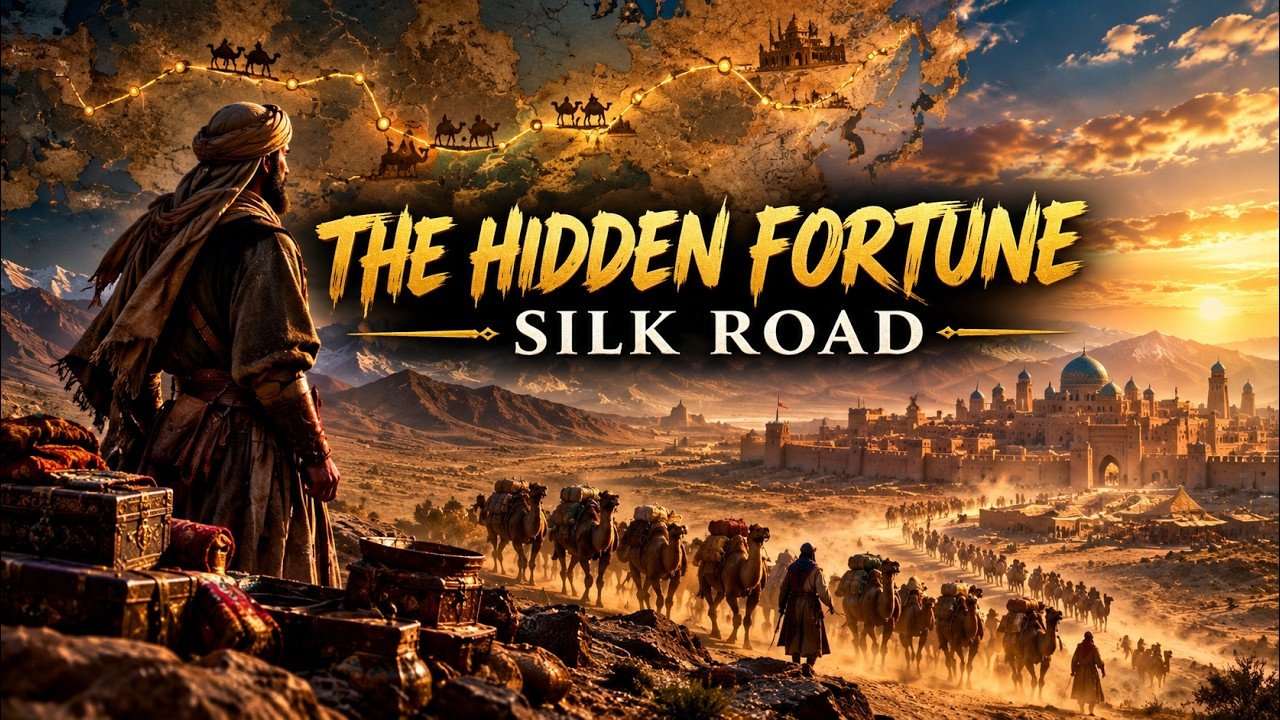
Long before satellite navigation, modern logistics software, and corporate travel insurance existed, intrepid traders mapped out expeditions across thousands of miles of unforgiving terrain. These early entrepreneurs spanned shifting sand dunes, icy mountain passes, and bandit-plagued valleys to bring exotic goods between East and West.
The Silk Road was never a single paved highway, but rather a chaotic web of overland routes connecting Asia, the Middle East, and Europe. Navigating this vast network required far more than physical endurance; it demanded meticulous strategic planning, calculated risk assessment, and sophisticated networking that mirrors modern corporate playbooks.
Modern business leaders and supply chain managers often look to recent tech innovations for inspiration, yet the fundamentals of risk mitigation were perfected centuries ago. From diversification to strategic alliances, the survival tactics of ancient Silk Road merchants remain strikingly applicable to today’s globalized economy.
Safety in Numbers: The Power of Strategic Alliances
Travelling alone with a saddlebag full of high-value silk or precious gemstones was effectively an open invitation to highway robbery. To protect their assets, merchants formed massive camel caravans, pooling their resources to hire specialized security escorts and local guides who knew every dangerous corner of the route.
This ancient practice is the direct ancestor of modern consortiums, joint ventures, and strategic business partnerships. By sharing operational costs and pooling security measures, individual traders significantly reduced their vulnerability to external threats, proving early on that collaboration often beats solo competition in volatile environments.
Furthermore, caravan leaders established strict operational rules to ensure group cohesion along the trail. Standardized paces, mandatory night watches, and organized signal systems kept the line intact across blinding sandstorms, establishing an early blueprint for corporate protocol and crisis management under extreme pressure.
Caravanserais: The Original Secure Logistics Hubs
As trade flourished, empires and local rulers along the Silk Road built fort-like roadside inns known as caravanserais. Positioned roughly one day’s travel apart—about 20 to 30 miles—these stone structures provided fortified walls, fresh water, quarters for travelers, and secure stables for pack animals.
These stops served as the world’s first standardized logistics hubs and secure data-sharing centers. Beyond offering physical safety, caravanserais allowed merchants to exchange real-time intelligence regarding road conditions, political instability in neighboring towns, regional market prices, and active bandit movements ahead.
Today, modern global enterprises rely on identical concepts, utilizing regional distribution nodes and threat-monitoring centers to maintain smooth operations. The ancient caravanserai proved that secure infrastructure combined with reliable information-sharing is the ultimate defense against operational disruption.
Diversification and Relay Trading: Don’t Risk It All
A common misconception is that a single merchant would haul goods all the way from Chang’an (modern-day Xi’an) to Rome. In reality, most traders operated on a relay system, selling their cargo to regional middlemen at key trading hubs rather than attempting the full, treacherous cross-continental trek.
By breaking a massive journey into manageable legs, merchants limited their exposure to unfamiliar territories and localized political conflicts. This division of labor reduced individual risk while allowing local experts—who understood regional languages and terrain—to handle the most dangerous geographic stretches.
This approach directly parallels modern supply chain diversification and risk management. Contemporary corporations rarely rely on a single vendor or route to transport critical components; instead, they distribute risk across regional suppliers to ensure that a localized disaster does not sink the entire enterprise.
Financial Engineering: Early Paper Money and Letters of Credit
Carrying heavy sacks of gold or silver coinage across lawless wilderness areas created an enormous security risk for traveling merchants. To solve this problem, ancient financiers created early paper currency systems and primitive letters of credit, allowing merchants to deposit funds in one city and redeem them thousands of miles away.
Sogdian and Persian merchant networks perfected trust-based financial transactions that eliminated the need to physical carry massive wealth across borders. If a caravan was raided, the bandits might seize the physical trade goods, but the merchant’s core financial capital remained safe in urban banking houses.
This innovative separation of capital from physical transit revolutionized global trade forever. Today’s digital payment gateways, encrypted banking transfers, and cyber-risk management strategies trace their core logic straight back to these ancient financial safety mechanisms.
Cultural Intelligence: The Ultimate Soft Power Defense
Perhaps the most underrated tool in the Silk Road merchant’s survival kit was cultural fluency and linguistic adaptability. Traders who took the time to learn local customs, dialects, and diplomatic etiquette were far better equipped to negotiate safe passage through hostile or unfamiliar territories.
Rather than relying purely on armed force, smart merchants cultivated strong relationships with local chieftains, paid fair regional transit tariffs, and adapted their behavior to fit local norms. This diplomatic soft power often turned potential attackers into protective allies along remote trade borders.
In our interconnected modern world, cultural intelligence remains a vital leadership asset for international expansion. Whether launching products overseas or managing cross-border teams, understanding local nuances and building authentic human trust remains the most effective strategy for long-term security and success.