
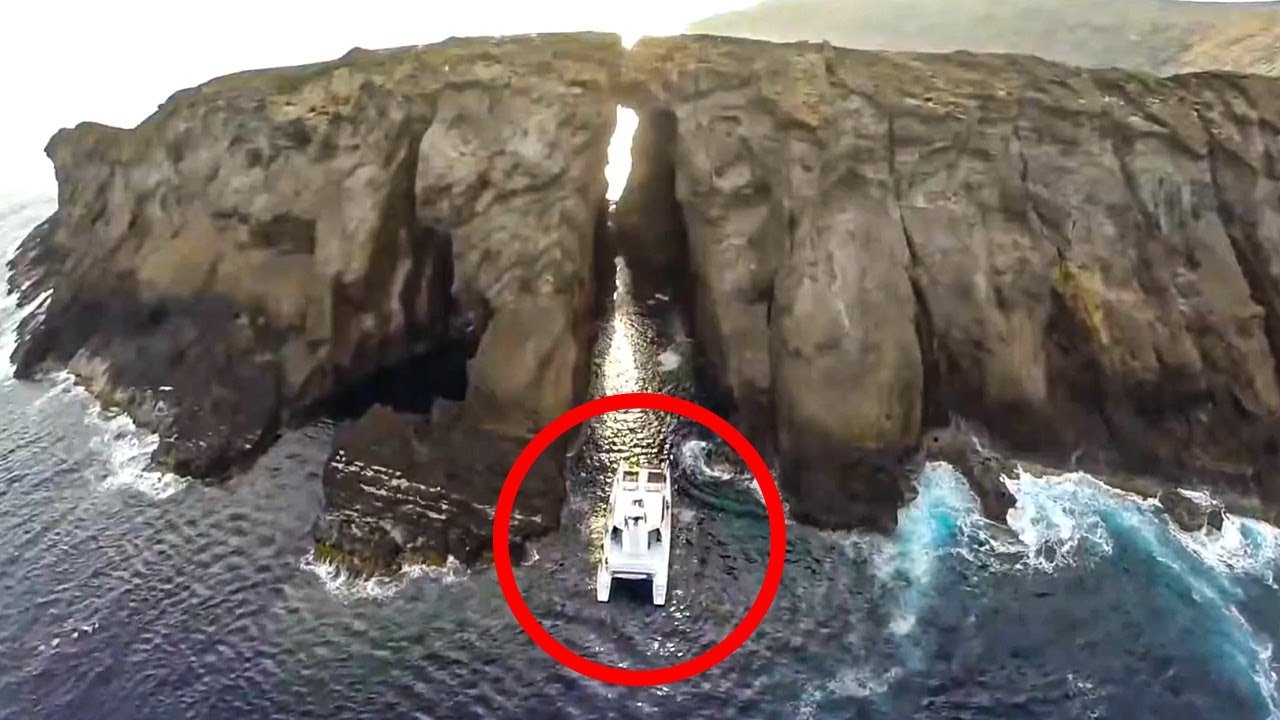
The world is packed with breath-taking beaches, historical landmarks, and bustling cities eager to welcome travelers with open arms. Wandering souls constantly search for the next item on their bucket lists, booking flights to popular destinations across the globe.
Yet, some places on Earth have placed a massive “Do Not Enter” sign at their front doors. These restricted locations range from deadly natural habitats to heavily guarded secrets protected by governments and religious institutions.
For curious travelers, forbidden places hold a unique, magnetic attraction that regular tourist spots simply cannot match. If you have ever wondered where you definitely cannot go on your next vacation, here are six extraordinary places strictly off-limits to outsiders.
Ilha da Queimada Grande: The Deadly Snake Island
Located roughly 90 miles off the coast of São Paulo, Brazil, sits an island that looks like a tropical paradise from a distance. However, Ilha da Queimada Grande is arguably one of the most dangerous real estates on the planet.
It is home to the critically endangered Golden Lancehead viper, one of the most venomous snakes in the world. Local estimates suggest there is roughly one lethal snake per square meter of terrain across the entire island.
Because a single bite can melt human flesh and cause rapid organ failure, the Brazilian Navy strictly prohibits public access. Only authorized researchers and select military personnel tasked with maintaining the automated lighthouse are occasionally granted permission to step foot ashore.
North Sentinel Island: Isolated by Choice and Law
Deep within the Indian Ocean lies North Sentinel Island, home to the Sentinelese people—one of the last uncontacted tribes on Earth. They have lived in voluntary isolation for thousands of years, fiercely rejecting any contact with the outside world.
Visitors who attempt to approach the shores are routinely met with a barrage of arrows and spears. The Indian government respects their choice and enforces a strict five-nautical-mile exclusion zone around the entire island.
This restriction protects both sides from potential disaster. Outsiders remain safe from physical hostility, while the islanders stay shielded from modern diseases to which they have zero natural immunity.
Surtsey Island: Nature’s Pristine Laboratory
In 1963, a massive underwater volcanic eruption near Iceland broke through the surface of the Atlantic Ocean, creating a brand-new island named Surtsey. Almost immediately, scientists recognized a rare opportunity to study how life colonizes virgin land.
To preserve the island in its completely natural state, access was permanently banned for the general public. Only a handful of certified biologists and geologists are permitted to visit Surtsey under strict supervision.
Every researcher must undergo a rigorous sanitization check before landing to prevent introducing non-native seeds, microbes, or insects. Thanks to these extreme precautions, Surtsey remains an untouched ecological time capsule.
The Vatican Apostolic Archive: Sealed History
Deep beneath the streets of Vatican City lies one of the most mysterious document vaults in human history. The Vatican Apostolic Archive houses centuries of papal records, state correspondence, historic trial transcripts, and official decrees.
Despite popular conspiracy theories, the term “secret” simply stems from a historical translation of the Latin word secretum, meaning private. However, the private archives remain heavily restricted to the everyday public.
Only qualified scholars who undergo a meticulous background check are allowed inside to examine specific historical documents. Browsing through the shelves is strictly prohibited, and many sections remain permanently closed to outsiders.
Lascaux Cave: Preserving Paleolithic Masterpieces
Nestled in southwestern France, the Lascaux Cave complex features some of the most famous prehistoric cave paintings ever discovered. Estimated to be around 17,000 years old, these vivid artworks depict large animals and human figures drawn by Paleolithic humans.
When the caves opened to the public after World War II, thousands of daily visitors inadvertently caused severe damage. Moisture, heat, and carbon dioxide from human breath sparked rapid mold growth that threatened the fragile artwork.
Authorities permanently banned public entry in 1963 to save the priceless prehistoric art from total destruction. Today, tourists can explore highly accurate full-scale replicas nearby, while the original caves remain completely sealed off.
Svalbard Global Seed Vault: Earth’s Ultimate Backup
Deep inside a frozen mountain on a remote Arctic island between Norway and the North Pole sits the ultimate insurance policy for humanity. The Svalbard Global Seed Vault stores millions of duplicate seed samples from crop collections worldwide.
Built to withstand natural disasters, climate change, and global conflicts, the facility keeps the world’s agricultural biodiversity safe deep inside the permafrost. The vault is designed to function even if power supplies completely fail.
Unsurprisingly, tourists are strictly banned from stepping inside the high-security installation. Visitors can only hike up to the iconic concrete entrance facade to snap photos before heading back down the snow-covered mountain.